Residents’ Guide to the
2025 Municipal Election
Everything you need to inform your vote for our next Mayor, City Council, Sheriff, and more.
Get ready to vote on Nov. 15th.
New Orleans needs leadership now more than ever. Morale is low, population is declining, and civic distrust is at an all time high. The good news? YOU have a say in what happens next! Here’s your hub to inform your vote in the 2025 Municipal Election.

It’s not over yet!
For this election, we go to the polls twice. The first vote, October 11th, was the primary election. Candidates that won more than 50% of the vote in the primary were elected.
In races where nobody got 50% of the vote, the top two candidates are back on the ballot in the general election (also called the “runoff”) on November 15.
Many races were decided in the primary, but there are some important decisions left to make on November 15th:
Early Voting starts Nov 1!
Orleans Parish voters can vote at any early voting location from 8:30am-6pm daily from November 1st - 8th. Locations:
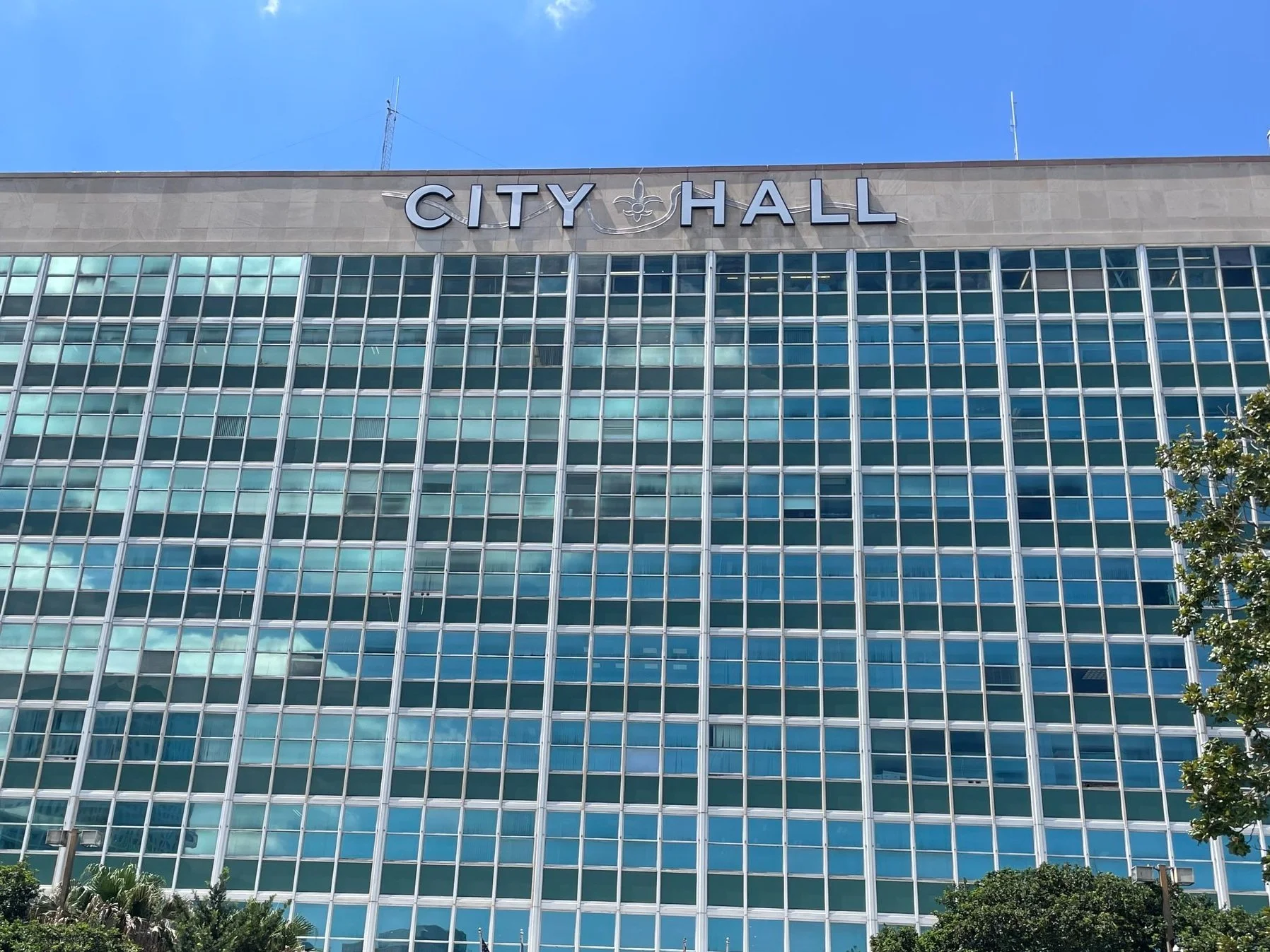
City Hall, 1300 Perdido St. Rm. #1W24
Algiers Courthouse, 225 Morgan St. Rm. #105
Voting Machine Warehouse, 8870 Chef Menteur Hwy
Lake Vista Community Center, 6500 Spanish Fort Blvd. 2nd Floor
Important dates.
Primary Oct. 11 | General Nov. 15
The Ballot Rundown
-

Positions
We’re electing a new Mayor, City Council members, Sheriff, Clerks and more. What do these people do? What does it take to do a good job? Get informed before you vote.
-

Candidates
See the list of who’s running for each position on your ballot.
-

Ballot Measures
Each ballot will include a few items that require the approval of voters, including changes to the City Charter, or neighborhood-specific fees.
Who is running?
This election included 7 positions: Mayor, Sheriff, City Council At-Large Div. 1 and Div. 2, City Councilmember for your District (A-E), Assessor, and Clerk of Criminal District Court. Many of these seats were decided in the primary election on Oct. 11th.
City Council Districts A and E and the Clerk of Criminal District Court will be decided in a runoff election between the top two candidates on Nov. 15th.
-
City Council District A represents Uptown, Hollygrove-Dixon, and parts of Mid-City. They make laws and land use decisions, control the budget, and regulate Entergy. (Learn more about what City Council does & see the district map here.)
Candidates in the runoff:
Holly Friedman (Website) - Democrat
Aimee McCarron (Website) - Democrat
Eliminated after the Primary election:
“Alex” Mossing (Website) - Democrat
Robert “Bob” Murrell (Website) - No Party
Bridget Neal (Website) - Republican
-
The District E Councilmember represents New Orleans East and the Lower 9th Ward. They make laws and land use decisions, control the budget, and regulate Entergy. (Learn more about what City Council does & see the district map here.)
Candidates in the runoff:
Jason Hughes (Website) - Democrat
Cyndi Nguyen (Website) - Democrat
Eliminated after primary election:
Richard Bell, Sr. - Democrat
Kimberly Burbank (Withdrew) - Democrat
Danyelle Christmas (Website) - Democrat
Nathaniel Jones (Website) - Independent
Willie Morgan (Website) - Democrat
Gavin Richard (Website) - Independent
Jonathan Anthony Roberts (Website) - No Party
-
The Criminal Court Clerk manages the court docket, records, and filings, and oversees local elections. (Learn more about what the Criminal Court Clerk does here.)
Candidates in the runoff:
Calvin Duncan (Website) - Democrat
Darren Lombard (Website) — Incumbent - Democrat
Eliminated after Primary
Valencia Miles - No Party
Who won?
Many seats were decided in the primary election on Oct. 11th. 3 races will be decided in a runoff election between the top two candidates on Nov. 15th. Below you’ll find the percentage of the vote each candidate earned in the primary.
-
The Mayor represents the whole city. (see what the Mayor does here.)
Candidates
Joseph “Joe” Bikulege Jr. - Independent - 0%
Russell J. Butler (Website) - No Party - 0%
“Manny Chevrolet” Bruno (Website) - No Party- 0%
Eileen Carter (Website) - No Party - 0%
Renada Collins (Website) - No Party- 0%
Royce Duplessis (Website) - Democrat - 22%
Arthur Hunter (Withdrew) - Democrat- 0%
Frank Robert Janusa (Website) - Republican- 2%
Helena Moreno (Website) - Democrat - 55%
Frank M. Scurlock (Website) - No Party- 0%
Oliver Thomas (Website) - Democrat - 19%
Ricky Twiggs (Website) - Independent- 1%
-
The Sheriff represents everyone. They manage the jail. (Learn more about what the sheriff does here.)
Candidates
Susan Hutson (Website) — Incumbent - Democrat - 17%
Ernesteayo J. “Ernest” Lee Sr. (Website) - Republican - 5%
Robert “Bob” Murray (Website) - Democrat - 2%
Julian Parker (Website) - Democrat - 2%
Edwin Mark Shorty, Jr. (Website) - Democrat - 21%
Michelle Woodfork (Website) - Democrat - 53%
-
The At-Large City Councilmember represents everyone. They make laws and land use decisions, control the budget, regulate Entergy, and serve as the President or Vice-President of City Council. (Learn more about what City council does here.)
Candidates
Delisha Boyd (Website) - Democrat - 31%
Matthew “Matt” Hill (Website) - Republican - 9%
Matthew Willard (Website) - Democrat - 59%
-
The At-Large City Councilmember represents everyone. They make laws and land use decisions, and serve as the President or Vice-President of City Council. (Learn more about what City council does here.)
Candidates
Kenneth Cutno (Website) - Democrat - 11%
Gregory Manning (Website) - Democrat - 24%
JP Morrell (Website) — Incumbent - Democrat - 66%
-
City Council District A represents Uptown, Hollygrove-Dixon, and parts of Mid-City. They make laws and land use decisions, control the budget, and regulate Entergy. (Learn more about what City Council does & see the district map here.)
Candidates
Candidates in the runoff:
Holly Friedman (Website) - Democrat - 39%
Aimee McCarron (Website) - Democrat - 32%
Eliminated after the Primary election:
“Alex” Mossing (Website) - Democrat - 6%
Robert “Bob” Murrell (Website) - No Party - 14%
Bridget Neal (Website) - Republican - 9%
-
The District B Councilmember represents Broadmoor, Central City, the Garden District, the CBD and Tulane-Gravier. They make laws and land use decisions, control the budget, and regulate Entergy. (Learn more about what City Council does & see the district map here.)
Candidates
Lesli Harris (D) — Incumbent, re-elected without opposition
-
The District C Councilmember represents Algiers, the French Quarter, Treme, Marigny, Bywater, and part of St. Roch. They make laws and land use decisions, control the budget, and regulate Entergy. (Learn more about what City Council does & see the district map here.)
Candidates
Eliot S. Barron - Green Party - 2%
Kelsey Foster (Website) - Democrat - 30%
Jackson Kimbrell (Website) - No Party - 4%
Freddie King III (Website) — Incumbent - Democrat - 64%
-
The District D Councilmember represents Gentilly, Lake Vista, Lafitte, and parts of the 7th ward, St. Roch, the 9th ward, and the East. They make laws and land use decisions, control the budget, and regulate Entergy. (Learn more about what City Council does & see the district map here.)
Candidates
Belden “Noonie Man” Batiste (Website) - Democrat - 21%
Eugene Green (Website) — Incumbent - Democrat - 67%
Leilani Heno (Website) - No Party - 12%
-
The District E Councilmember represents New Orleans East and the Lower 9th Ward. They make laws and land use decisions, control the budget, and regulate Entergy. (Learn more about what City Council does & see the district map here.)
Candidates
Candidates in the runoff:
Jason Hughes (Website) - Democrat - 36%
Cyndi Nguyen (Website) - Democrat - 46%
Eliminated after primary election:
Richard Bell, Sr. - Democrat - 4%
Kimberly Burbank (Withdrew) - Democrat - 4%
Danyelle Christmas (Website) - Democrat - 3%
Nathaniel Jones (Website) - Independent - 1%
Willie Morgan (Website) - Democrat - 4%
Gavin Richard (Website) - Independent - 1%
Jonathan Anthony Roberts (Website) - No Party - 1%
-
The Assessor sets property values that are used to calculate taxes. (Learn more about what the assessor does here.)
Candidates
Coreygerard Dowden - No Party - 2%
Casius H. Pealer III (Website) - Democrat - 28%
Earl “Jay” Schmitt Jr. - Republican - 8%
Erroll G. Williams (Website) — Incumbent - Democrat - 61%
-
The Criminal Court Clerk manages the court docket, records, and filings, and oversees local elections. (Learn more about what the Criminal Court Clerk does here.)
Candidates in the runoff:
Calvin Duncan (Website) - Democrat - 47%
Darren Lombard (Website) — Incumbent - Democrat - 46%
Eliminated after Primary
Valencia Miles - No Party - 7%
Research Your Ballot
Resource Roundup
-

Candidate Questionnaires
What the candidates say about themselves:
Nonprofits survey the candidates on where they stand on issues like housing, affordable energy, flooding, government effectiveness and more. Check out the candidates’ responses here.
-

Editorials & Score Cards
What other people say about the candidates:
Local news organizations and magazines review candidates and write editorials about them. Here’s a round-up.
-

Ballot Measure Analysis
What advocates and analysts say about the ballot propositions.
The November 15th ballot has 5 City wide propositions. Learn what advocates have to say here!

Ballot Measures - November 15
(Amendments, and other items on your ballot besides elected positions)
There are 3 bond sale propositions on your ballot, which would allow the City to sell $510 Million in bonds to fund large projects in affordable housing, infrastructure, and stormwater management. We’ve created a full guide to the bond sale propositions to help you navigate these 3 ballot items.
Parishwide Bond Sale Propositions
Bond Sale Prop. 1: Affordable Housing
-
Parishwide Proposition No. 1 of 3
(Affordable Housing Projects)Shall the City of New Orleans, Louisiana (the "City"), incur debt and issue up to $45,000,000 of general obligation bonds of the City, in multiple series, each series to run not exceeding thirty (30) years from the date thereof and bearing interest at a rate not exceeding eight percent (8.00%) per annum, for the purpose of making capital improvements in the City approved by the New Orleans City Council and permitted by the City's Home Rule Charter consisting of constructing, renovating, acquiring, and/or improving affordable housing facilities, including acquiring all necessary furnishings, fixtures, and equipment therefor, which bonds will be general obligations of the City, payable from ad valorem taxes to be levied and collected in the manner provided by Article VI, Section 33 of the Constitution of the State of Louisiana of 1974 and statutory authority supplemental thereto, with no estimated increase in the millage rate to be levied in the first year above the 14.5 mills currently being levied to pay General Obligation Bonds of the City?
-
The City is proposing a to borrow $45 million to fund affordable housing projects.
The bond is for 30 years, meaning the City will pay back the costs and interest over 30 years.
A YES vote means:
The City is authorized to issue the $45 million in bonds.
Funds will be available for affordable housing initiatives.
A NO vote means:
City cannot issue the bond;
Funding for affordable housing will have to be diverted from other uses.
Learn more about bond sales here.
-
These funds would be used to address the affordable housing crisis in New Orleans by constructing, renovating, and acquiring affordable housing facilities.
The City has discussed using this funding to help fund the city's recently established Housing Trust Fund, though the proposition does not specifically reference the HTF.
What is the Housing Trust Fund? Last year, voters approved a charter amendment that dedicates 2% of the City’s General Fund to affordable housing. The Housing Trust Fund (HTF) is flexible funding to help overcome barriers to the housing crisis, including gap financing, helping property owners rehab damaged housing, and more. Where most funds for housing come from HUD, which has heavy restrictions on uses, this fund would give the City the ability to meet needs as they arise without restrictions.
The HTF has several layers of accountability. The uses are determined by a the Housing Trust Fund Advisory Committee, which includes housing experts and impacted residents, and the City Council. The money is administered by the City, the New Orleans Redevelopment Authority (NORA), and Finance New Orleans.
What will happen with this money if approved?
The City is proposing using this bond funding to help cover the approximately $12M/year costs of the HTF. There are roughly $2M in administration and other HTF costs that the bond funds are not eligible to cover and the City would have to find other sources to pay for. The specific projects funded would be determined by the Housing Trust Fund Advisory Committee and City Council. This could include projects like:
Subsidies for developers and property owners to build large multifamily developments, triplexes duplexes and single-family homes, and rehabilitate existing ones.
Expanding home ownership by subsidizing new, for-sale affordable homes
Helping low-income homeowners build fortified roofs.
Subsidizing property repairs (fortified roofs, HVAC repairs, weatherization, etc) in exchange for small landlords making their units affordable for a specified period of time.
What will happen if this proposition doesn’t pass?
If the proposition doesn’t pass, the City will have to move General Fund dollars from other uses to fully fund the Housing Trust Fund, and fund any other affordable housing.
Bond Sale Prop. 2: Infrastructure
-
Parishwide Proposition No. 2 of 3
(City Infrastructure Projects)Shall the City of New Orleans, Louisiana (the "City"), incur debt and issue up to $415,000,000 of general obligation bonds of the City, in multiple series, to run not exceeding thirty (30) years from each date thereof and bearing interest at rates not exceeding eight percent (8.00%) per annum, for the purpose of making capital improvements in the City approved by the New Orleans City Council and permitted by the City's Home Rule Charter, including (i) constructing, renovating, acquiring, equipping, and/or improving roads and streets, bridges, buildings, lands, public safety facilities, parks and recreational facilities, and other infrastructure in the City; (ii) acquiring long-lived software and technology improvements; and (iii) acquiring heavy equipment, furnishings, and essential service vehicles for public purposes, which bonds will be general obligations of the City, payable from ad valorem taxes to be levied and collected in the manner provided by Article VI, Section 33 of the Louisiana Constitution of 1974 and statutory authority supplemental thereto, with no estimated increase in the millage rate to be levied in the first year above the 14.5 mills currently being levied to pay other general obligation bonds of the City?
-
The City is proposing to borrow $415 Million from investors to fund infrastructure projects, including:
improving streets, bridges, buildings, public safety facilities, parks and recreational facilities, and other infrastructure;
buying software and technology improvements; and
buying heavy equipment, furnishings, and essential service vehicles for public purposes,
The bond is for 30 years, meaning the City will pay back the costs and interest over 30 years.
A YES vote means:
The City is allowed to borrow the $415 Million for infrastructure
Funding becomes available to accomplish major infrastructure projects over the next 10 years.
A NO vote means:
The City is not approved to borrow $415M for infrastructure.
The City will have to find other funding sources for any infrastructure projects, and many of the projects on the list will not happen.
Learn more about bond sales here.
-
The City has identified 118 priority projects to fund with this bond sale, if passed. The plan is to focus on 7 major types of projects:
Repairs to Streets, roads, and bridges - About half of the funding would go towards streets, with over $120M for minor street repairs and more than $80M in major street repairs across the City. Specific streets are listed in the project list, and additional funding has been dedicated as flexible funding for streets in each Council District.
Trails, walking paths, greenways, and green spaces, like extending the Lafitte Greenway and new walking paths/trails in New Orleans East, on Elysian Fields, and on People’s Avenue.
Public buildings and facilities improvements, such as repairs to the Municipal Auditorium, repairing and replacing HVAC systems at key public buildings, and construction of a new Sign & Signal Shop for DPW employees previously working in Katrina trailers on the Greenway.
Public safety facilities, including a new secure evidence and property storage facility for the New Orleans Police Department (replacing the previous rat-infested facility) and other Public Safety agencies like the Clerk of Criminal District Court and renovations of the jury rooms at Criminal District Court.
Parks and recreational facilities, including improvements to NORD facilities across the City, infrastructure repairs at City Park, and redevelopment of the old Sign & Signal Shop along the Lafitte Greenway
Heavy equipment for City departments like the Fire Department and Parks & Parkways
Economic Development projects including Charity Hospital, the River District, Six Flags, Mercy Hospital, and the Naval Support Activity.
KEY PROJECTS:
Clean Energy & Resilience Hubs ($6.9 million)– Includes the redevelopment of the Agriculture Street Solar Field (the former Gordon Plaza site), installing rooftop solar and battery backup, and the creation of Community Resilience Hubs at recreation centers. These investments would provide reliable backup power during outages, expand access to renewable energy, and create safe community gathering places in times of need.
New Orleans Downtown Transit Center & Connectivity ($1.5 million) – Matching funds to construct a new transit hub that improves regional connectivity, supports public transit, and reduces reliance on personal vehicles.
Lincoln Beach Phase 2 ($8.5 million) – Continued redevelopment of Lincoln Beach, expanding public access to a historic waterfront site while integrating environmental restoration and resilience features.
Citywide Streetlighting Improvements ($1.4 million) – Investments in “Lighting the Big Easy” and supplemental upgrades across the city to improve public safety, modernize infrastructure, and ensure more reliable service for residents.
Trails, Walking Paths, and Greenways ($6.9 million) – Investments for New Orleans East walking paths on Michoud, Crowder, and Lake Forest; Lafitte Greenway Extension; Elysian Fields walking path; Real Timbers walking path, & People’s Avenue walking path.
Bond Sale Prop. 3: Drainage
-
Parishwide Proposition No. 3 of 3
(Drainage and Stormwater Management Projects)Shall the City of New Orleans, Louisiana (the "City"), incur debt and issue up to $50,000,000 of general obligation bonds of the City, in multiple series, to run not exceeding thirty (30) years from each date thereof and bearing interest at rates not exceeding eight percent (8.00%) per annum, for the purpose of constructing, renovating, and improving surface and subsurface drainage systems and stormwater management facilities in the City approved by the New Orleans City Council and permitted by the City's Home Rule Charter, including acquiring all necessary equipment, property, and installations therefor, which bonds will be general obligations of the City, payable from ad valorem taxes to be levied and collected in the manner provided by Article VI, Section 33 of the Louisiana Constitution of 1974 and statutory authority supplemental thereto, with no estimated increase in the millage rate to be levied in the first year above the 14.5 mills currently being levied to pay other general obligation bonds of the City?
-
The City is proposing to borrow $50 million to fund drainage and stormwater management projects.
The bond is for 30 years, meaning the City will pay back the costs and interest over 30 years.
A YES vote means:
The City is authorized to borrow the $50 million for drainage and stormwater management.
Funds will be available for a specific set of drainage and stormwater management projects.
A NO vote means:
The City will not borrow $50 Million for drainage.
The City will have to find other funding sources for any stormwater management or drainage projects, and many of the projects on the list will not happen.
Learn more about bond sales here.
-
The City would use this funding to fund 14 projects across the City that would reduce flooding and improve drainage.
There’s a mix of direct project implementation funding, neighborhood-level drainage studies, and citywide system improvements.
Project implementation: Building green infrastructure systems such as subsurface retention tanks, upgraded drains, and stormwater parks that capture and hold rainwater before it floods streets and homes.
Neighborhood studies: Conducting hydrologic and hydraulic (H&H) drainage studies. These technical reviews identify specific problem areas and design tailored solutions for future projects; and they’re required before constructing drainage projects.
A major focus is on green infrastructure, which allows water to be absorbed and stored in parks, streetscapes, and open spaces instead of overwhelming pumps and pipes. Examples include stormwater retention at Comiskey Park, Fleur de Lis Park, and St. Anthony Green Streets.
Key Projects
St. Anthony Green Streets ($8.6M) - renovations at Filmore & Gatto Parks (benches, trees and landscaping, playgrounds, half basketball court, water fountains, public art); “Pocket parks” that incorporate stormwater management as a key component, and stormwater improvements in the neutral ground and along sidewalks.
Mercy Hospital / Lindy Boggs Redevelopment ($6M)
Comiskey Park Drainage ($5M) - Installing underground water storage under Comiskey Park, and improving drainage on nearby streets.
St. Bernard Neighborhood - Willie Hall Playground ($3.2M) - Rebuild the playground and fields at Willie Hall, including football and baseball fields, regulation running track, bleachers, basketball court, lighting, landscaping, and five (5) million gallons of underground stormwater storage underneath the athletic fields. The second phase of the project includes building a multi‐purpose building with a concessions counter, public restrooms, equipment storage, community kitchen, and a small office. The third phase includes walking trails/paths and tree plantings throughout the green space between Bayou St. John and the new Willie Hall Playground complex.
Green Infrastructure across neighborhoods - Neighborhood level projects in Broadmoor, Lakeview, the Upper 9th Ward, and in Audubon Park and City Park.
Parishwide Charter Amendment Prop. 1 - Master Plan Deadlines
-
Parishwide Home Rule Charter Amendment Proposition No. 1 of 2
Shall Section 5-404 of the Home Rule Charter of the City of New Orleans be amended to extend the deadlines for the City Planning Commission and City Council to act on the Master Plan and amendments thereto, as described in Ord. Cal. No. 35,155-30397, M.C.S.?
-
The city has a “Master Plan” (also known as the city’s long-range planning document) that sets out how land, neighborhoods, infrastructure, growth, and so on should evolve.
There are deadlines in the city’s Charter that require key bodies — the City Planning Commission (CPC) and the New Orleans City Council — to review and act on amendments to the Master Plan (or items that change land use) within certain timeframes.
Currently, the CPC has 60 days to review and the City Council has 45 days.
This proposal would extend those deadlines for the CPC and City Council, giving them each 90 days to act on the Master Plan or its amendments.
Why this matters
This change may seem technical, but here’s why it can matter for residents:
More time for review: Extending deadlines means more time for the Planning Commission and City Council to consider proposals, take public input, and make decisions about how land is used, how neighborhoods change, and how growth is managed.
Potential for more deliberation: With more time, there could be more opportunity for stakeholders (residents, neighborhood groups, developers) to weigh in, and for planning staff to analyze implications.
Impact on development pace: On the flip side, giving more time could slow down how quickly certain projects or land-use changes move through the process. For some residents, that may be a benefit (more oversight) or a frustration (slower process).
A “yes” vote supports this change; a “no” vote opposes extending those deadlines.
Parishwide Charter Amendment Prop. 2 - City Attorney
-
Parishwide Home Rule Charter Amendment Proposition No. 2 of 2 Shall the Home Rule Charter of the City of New Orleans be amended to establish Article IV, Section 4-406, which provides for the independence of the City Attorney as the legal representative of the City of New Orleans and includes provisions that clarify the identity of the City Attorney's primary client, compel compliance with ethical rules governing institutional representation, require consultation with all branches of government, mandate independent legal and impartial legal judgment in the face of conflicting directives, impose an affirmative duty to comply with and uphold laws whenever possible, prohibit conflicting representation in inter-branch disputes without consent, authorize the adoption of legislation ensuring the operational independence of the Law Department, and prevent unilateral removal of the City Attorney by the Mayor in certain situations, all as more fully described in Ord. Cal. No. 35,166-30410, M.C.S.?
-
What does the City Attorney do?
The City Attorney is the lawyer for the city government.
They give legal advice to the Mayor, the City Council, and other city departments and boards.
They handle all the legal matters in which the city has an interest or is a party.
They prepare proposed ordinances if requested by the Mayor or Councilmembers.
They review all city contracts and legal documents that affect the city.
In short: the City Attorney’s role is to represent and protect the city’s legal interests, make sure the city follows the law, and advise city officials about how to act legally.
This proposal would change the duties and powers of the City Attorney’s office, as laid out in the City’s Charter (which is like the City’s constitution.)
Why is this on the ballot?
Right now, the Mayor has the power to appoint and remove the City Attorney. But the City Attorney’s job is to represent both the Mayor’s office and the City Council — and those two branches sometimes disagree. That can create a conflict of interest, since the City Attorney might be expected to argue against the person who controls their job.
This amendment is being proposed to make the City Attorney’s office more independent and transparent, and to make clear that the City Attorney serves the city as a whole — not just one elected official.
Supporters say this ensures accountability across branches, while opponents say it could weaken the Mayor’s ability to manage their administration.
What your vote means
A "yes" vote supports amending the charter of the City of New Orleans to change the powers and duties of the city attorney to:
prevent the unilateral removal of the city attorney by the mayor;
require compliance with ethics rules;
require consultation with all government branches; and
clarify the primary client of the city attorney, among other changes.
A "no" vote opposes amending the charter of the City of New Orleans to change the powers and duties of the city attorney.
Neighborhood-Specific Propositions
The following will only appear on your ballot if you live in the designated neighborhood:
-
Broadmoor Neighborhood Improvement Dist. - $175 Parcel Fee Renewal - CC - 5 Yrs.
What it says:
Shall the City of New Orleans levy an annual fee on each improved parcel of land within the Broadmoor Neighborhood Improvement District (the "District"), in an amount not to exceed two hundred dollars ($200), with the precise amount as requested by duly adopted board resolution, currently specified as one hundred seventy-five dollars ($175) which fee is estimated to generate approximately $306,250 annually, for a period of and not exceeding five (5) years, beginning January 1, 2026 and ending December 31, 2030, to be used exclusively for promoting quality of life initiatives and encouraging the beautification and overall betterment of the District, except a one percent (1%) City collection fee, and if used for additional services, such services shall be supplemental to and not in lieu of services provided by the city, the state, or other political subdivisions?
What it means:
The Broadmoor Neighborhood Improvement District (a Neighborhood Improvement District, NID) is asking to renew a parcel fee of $175 per “improved parcel” (so properties with improvements) annually.
It would run for 5 years (Jan 1, 2026 to Dec 31, 2030) if approved.
Proceeds are used for “quality of life initiatives” in Broadmoor: beautification, neighborhood‐betterment, etc. The District’s board determines specifics under public meetings, etc.
A YES vote means:
The fee is renewed, so property owners with improved parcels in Broadmoor will pay $175/year for the next 5 years.
The District will continue or expand its current programs (beautification, community services, etc.) using the collected funds.
A NO vote means:
The fee would expire; Broadmoor would lose that revenue stream, which likely means scaling back programs and services funded by that parcel fee (or finding alternate funding sources).
-
French Quarter Economic Development Dist. - 0.245% S&U Tax Renewal - CC - 5 Yrs.
What it says
Shall the current .245% sales tax levied within the boundaries of the French Quarter Economic Development District ("FQEDD"), to be collected on the sale at retail, the use, the lease or rental, the consumption and storage for use or the consumption of tangible personal property and sales of services within the boundaries of the FQEDD, be renewed for a period of five years, beginning July 1, 2026 and ending June 30, 2031 (an estimated $3,158,794.00 million reasonably expected at this time to be collected as a result of the levy per year) for the purpose of funding POST Certified supplemental police patrols and homeless assistance services, with the initial $2 million collected in any year dedicated to supplemental police patrols and any additional revenue to be divided between additional patrols and public safety programs (including homeless assistance), and administered by the French Quarter Management District for fiscal and operational oversight of the FQEDD Trust Fund and services provided by such fund and subject to quarterly budget and expenditure reports to the City Council, to facilitate economic development within the FQEDD?
What it means:
This is a renewal (or continuation) of an existing 0.245% sales & use tax in the French Quarter Economic Development District (FQEDD).
The tax revenue is used for public safety programs in the French Quarter: additional patrols by POST-certified officers, etc.
The tax was approved previously in 2021, set to expire June 30, 2026. This measure would renew/extend that.
A YES vote means:
The 0.245% additional tax stays in place for the French Quarter for the specified period (5 years).
A NO vote means:
The tax expires as scheduled (June 30, 2026), so the additional public safety funding stops. Unless some other source replaces it, those extra patrols or services could be reduced or eliminated.
-
Lakewood Crime Prev. & Imp. Dist. - $600 Parcel Fee - CC - 8 Yrs.
What it says:
Lakewood Crime Prevention and Improvement District Proposition
Shall the City of New Orleans levy an annual fee on each parcel within the Lakewood Crime Prevention and Improvement District ("District"), as delineated in La. R.S. 33:9091.8(C), in an amount not to exceed six hundred dollars ($600), for a period of eight (8) years, commencing January 1, 2026 and ending December 31, 2033, which is estimated to generate approximately $251,400.00 annually, to be used to aid in crime prevention by providing security for district residents and to serve the needs of the residents of the District by funding beautification and other activities and improvements for the overall betterment of the District, except a 1% City collection fee, and if used for additional law enforcement or security personnel and their services, such personnel and services shall be supplemental to and not in lieu of those provided by the New Orleans Police Department, said fee to be in lieu of and replace the $450 parcel fee authorized to be levied through 2026 pursuant to an election held on April 28, 2018?
What it means:
The Lakewood Crime Prevention & Improvement District is asking for a parcel fee of $600 per parcel annually, for 8 years. (This is an increase from earlier max/limits for that District.)
Use: to fund crime prevention and improvement services for Lakewood residents: additional security/police patrols, possibly beautification/etc.
A YES vote means:
Property owners in the Lakewood district will pay $600 per parcel a year for the 8‐year period.
The additional revenue will go to fund public safety, crime prevention, community improvements in Lakewood.
A NO vote means:
The fee is not approved; the district doesn’t get that funding.
-
Spring Lake Subdivision Imp. Dist. - $200 Parcel Fee Renewal - CC - 8 Yrs.
What it says:
Spring Lake Subdivision Improvement District Proposition
Shall the City of New Orleans renew an annual flat fee on the taxable real property within the Spring Lake Subdivision Improvement District ("District"), as delineated by La. R.S. 33:9074(B), in an amount not to exceed two hundred dollars, for eight years, beginning January 1, 2027 and ending December 31, 2034, which is estimated to generate approximately $40,800 annually, to be used exclusively for the purpose of promoting and encouraging the beautification, security, and overall betterment of the District, except a 1% City collection fee, and if used for additional law enforcement or security personnel and their services, such personnel and services shall be supplemental to and not in lieu of personnel and services provided by the New Orleans Police Department?
What it means:
The Spring Lake Subdivision Improvement District is asking to renew a parcel fee of $200 per parcel per year for 8 years.
The funds are used for services/improvements in that subdivision (e.g. security, beautification, maintenance, etc.)
A YES vote means:
Property owners in Spring Lake will continue paying $200/year for next 8 years.
The district continues its improvement programs funded by that fee.
A NO vote means:
The renewal fails; fee lapses. Services may be reduced.
-
Tall Timbers Crime Prev. and Imp. Dist. - $230 Parcel Fee - CC - 5 Yrs.
What it says:
Tall Timbers Crime Prevention and Improvement District Proposition
Shall the City of New Orleans levy an annual flat fee on each parcel within the Tall Timbers Crime Prevention and Improvement District ("District"), as delineated by La. R.S. 33:9091.29(B), in an amount not to exceed: two hundred thirty dollars per parcel for the first two years, and two hundred fifty dollars per parcel for the third and any subsequent year, for five years, beginning January 1, 2026 and ending December 31, 2030, which is estimated to generate between $129,720 and $141,000 annually, to be used exclusively for the purposes of aiding in crime prevention for District residents and their property and serving the needs of District residents by funding beautification and other activities and improvements for the overall betterment of the District and the quality of life of its residents, except a 1% City collection fee, and if used for additional law enforcement or security personnel and their services, such personnel and services shall be supplemental to and not in lieu of personnel and services provided by the New Orleans Police Department?
What it means:
Tall Timbers Crime Prevention & Improvement District is asking for a parcel fee of $230 for the first two years; and $250 for the third year and each following year.
Purposes likely include enhanced security/crime prevention, district improvements.
A YES vote means:
The fee is approved; district gets funding for crime prevention & improvement work for 5 years.
A NO vote means:
No new fee; district won’t have that revenue; services might be reduced.
-
Upper Audubon Security Dist. - $1,200 Parcel Fee - CC - 7 Yrs.
What it says:
Upper Audubon Security District Proposition
Shall the City of New Orleans levy an annual fee on each parcel within the Upper Audubon Security District ("District"), as delineated in La. R.S. 33:9091.12, in an amount not to exceed $1,200 per year for a period of seven years, commencing January 1, 2026 and ending December 31, 2032, which fee is estimated to generate approximately $232,000 annually, to be used solely and exclusively to aid in crime prevention and reduction by providing additional security for district residents, except a 1% City collection fee, and if used for additional law enforcement or security personnel and their services, such personnel and services shall be supplemental to and not in lieu of those provided by the New Orleans Police Department, said fee to be in lieu of and replace the maximum $700 parcel fee authorized to be levied through 2026 pursuant to an election held on November 18, 2017?
What it means:
Upper Audubon Security District is proposing a $1,200 parcel fee/year for 7 years.
A YES vote means:
Property owners in the Upper Audubon district pay $1,200/year for 7 years.
The specified level of services (security, improvements, etc.) will be funded for that period.
A NO vote means:
Fee is not approved; those services either won’t be provided at that level or the district will need other funds.
Ballot Measures - October 11
(Amendments, and other items on your ballot besides elected positions)
“Fair Chance” Citywide Charter Amendment - PASSED
-
Shall Article II, Section 2-202(6) of the Home Rule Charter of the City of New Orleans be amended to provide that no law shall arbitrarily and unreasonably discriminate against a person based on conviction history?
-
Parishwide Home Rule Charter Amendment - Amends Article II, Section 2-202(6) - CC
The governing document for the City of New Orleans is called the Home Rule Charter. It puts governing structures, processes and procedures for the City into law, much like the Federal or State Constitution, but at the local level. The City Charter contains a bill of rights that details the rights guaranteed to New Orleans residents, including many of the rights enshrined in the US Constitution.
Last year, voters approved an amendment that added workers rights to a living wage, paid sick leave and the right to organize to the Bill of Rights.
This amendment would add conviction history to the list of discrimination protections in our Bill of Rights. This section (#6) of the bill of rights currently says:
“No law shall deprive any person of any rights, privileges, or immunities secured by the Constitution and laws of the United States or the State of Louisiana, nor shall any law discriminate against any person because of race, color, religion, or national origin. No law shall arbitrarily and capriciously or unreasonably discriminate against a person because of birth, disability, sex, sexual orientation, gender identification, culture, language, social origin, or political affiliations.” (Source: Municode)
This amendment would add “conviction history” to the list of protections.
A YES vote would add “conviction history” to the discrimination protections in the Charter’s bill of rights.
A NO vote would leave the Charter’s bill of rights the same.
Castle Manor Improvement Parcel Tax Measure - FAILED
-
Shall the City of New Orleans levy an annual fee on each parcel within the Castle Manor Improvement District ("District"), as delineated by La. R.S. 33:9091.28(B), in an amount not to exceed $100 per residentially zoned parcel for the first three years that the fee is collected and $125 for the next two years of collection, and not to exceed $200 per commercially zoned parcel for the first three years that the fee is collected and $225 for the next two years of collection, except a parcel whose owner qualifies for special assessment pursuant to Article VII, Section 18(G)(1) of the Louisiana Constitution, with the precise amount as requested by duly adopted board resolution, for a term of five years, commencing on January 1, 2026 and ending December 31, 2030, which is estimated to generate approximately $65,000 annually, to be used exclusively for the purpose of promoting and encouraging the beautification and security of the District, except a 1% City collection fee, and if used for additional law enforcement or security personnel and their services, such personnel and services shall be supplemental to and not in lieu of personnel and services provided by the New Orleans Police Department?
-
A "yes" vote supported authorizing the city to levy an annual parcel fee of up to $100 for residential parcels and $200 for commercial parcels for the first three years, and up to $125 for residential parcels and $225 for commercial parcels for the next two years, generating an estimated $65,000 annually for five years beginning in 2026 to fund beautification, security, and supplemental law enforcement in the Castle Manor Improvement District.
A "no" vote opposed authorizing the city to levy an annual parcel fee of up to $100 for residential parcels and $200 for commercial parcels for the first three years, and up to $125 for residential parcels and $225 for commercial parcels for the next two years, generating an estimated $65,000 annually for five years beginning in 2026 to fund beautification, security, and supplemental law enforcement in the Castle Manor Improvement District.
